Aarvi Learning Solutions

Author name: Vighnesh

Blogs

Theatre-Based Training for Corporate Growth

Theatre-Based Training for Corporate How Can Theatre-Based Training Create Real, Lived Learning Experiences at Work? In most corporate training rooms, learning often follows a predictable pattern—presentations, discussions, maybe a few activities. But somewhere between slides and note-taking, something gets lost: genuine engagement. That’s where theatre-based training steps in, not as an alternative, but as a powerful transformation of how people learn, connect, and grow within organizations. Theatre-based training brings the energy of performance into the workplace. It uses techniques like role-play, improvisation, storytelling, and character-building to create experiences that go far beyond traditional learning methods. Instead of just hearing about communication, leadership, or teamwork, participants actually live those skills in real-time scenarios. Learning by Doing, Not Just Listening One of the biggest challenges in corporate training is retention. Employees often forget what they learned within days because the learning wasn’t fully experienced. Theatre-based training changes that dynamic completely. When individuals step into a role, express emotions, and react spontaneously, the learning becomes deeply personal and memorable. Imagine a session on conflict resolution. Instead of discussing theories, participants enact workplace conflicts—miscommunication between teams, leadership dilemmas, or customer interactions. As they perform and observe, they begin to understand not just what to do, but how it feels to do it. That emotional connection creates lasting impact. Explore what’s possible with Aarvi Theatre Based corporate training From learning to living the experience, transform teams with theatre-based training. Learn More Building Authentic Communication Skills In today’s corporate environment, communication is more than just exchanging information—it’s about clarity, empathy, and presence. Theatre-based training helps individuals become more aware of their tone, body language, and listening skills. Through exercises like improvisation and dialogue delivery, participants learn to think on their feet, respond with confidence, and adapt to unexpected situations. These are the exact skills required in client meetings, team collaborations, and leadership roles. Over time, employees begin to communicate not just effectively, but authentically—something that no slide deck can truly teach. Strengthening Team Dynamics Teams don’t become strong just by working together; they become strong by understanding each other. Theatre-based training creates a safe space where individuals can express themselves without judgment. Activities often require collaboration, trust, and mutual support. Whether it’s building a scene together or performing a group act, participants learn to rely on each other’s strengths. This naturally breaks down hierarchies and encourages openness across all levels of the organization. The result is a more connected team—one that communicates better, supports each other, and works towards shared goals with clarity. Unlocking Creativity and Innovation Corporate environments sometimes unintentionally limit creativity due to structure and routine. Theatre disrupts that pattern in the best way possible. It encourages participants to think differently, explore ideas freely, and step outside their comfort zones. Improvisation exercises, in particular, train the mind to be agile. There are no scripts, no fixed answers—just spontaneous thinking and creative expression. This mindset directly translates into the workplace, where innovation often requires quick thinking and fresh perspectives. Employees start approaching problems with curiosity instead of hesitation, making them more adaptable in fast-changing business environments. Developing Confident Leaders Leadership is not just about decision-making; it’s about presence, influence, and emotional intelligence. Theatre-based training helps individuals develop these qualities naturally. When participants perform in front of others, they build confidence. When they step into different roles, they develop empathy. When they receive feedback, they become more self-aware. All these elements contribute to stronger, more effective leadership. Leaders trained through theatre techniques often demonstrate better engagement with their teams, clearer communication, and a stronger ability to inspire others. Creating a Culture of Engagement Perhaps the most valuable outcome of theatre-based training is the shift it creates in workplace culture. It replaces passive learning with active participation. It turns training sessions into experiences people look forward to rather than obligations they attend. Employees feel heard, valued, and involved. They don’t just attend training—they become part of it. This level of engagement naturally boosts morale, strengthens relationships, and improves overall productivity. Why Theatre-Based Training Works for Modern Organizations Today’s workforce is dynamic, diverse, and constantly evolving. Traditional training methods often struggle to keep up with these changes. Theatre-based training, on the other hand, is flexible, human-centric, and deeply engaging. It aligns perfectly with the needs of modern organizations by focusing on real-world application, emotional intelligence, and interpersonal skills. Whether it’s onboarding new employees, developing leaders, or enhancing team performance, this approach delivers results that go beyond the training room. Bringing It All Together Theatre-based training is not about turning employees into performers. It’s about helping them become more aware, expressive, and confident individuals within their professional roles. It transforms learning into an experience—one that stays with participants long after the session ends. For organizations looking to create meaningful change, improve communication, and build stronger teams, theatre-based training offers a refreshing and effective approach. It doesn’t just teach skills; it brings them to life. And in a world where connection and adaptability define success, that kind of learning makes all the difference.

Blogs

Everest Challenger Simulation: A Corporate Experiential Learning

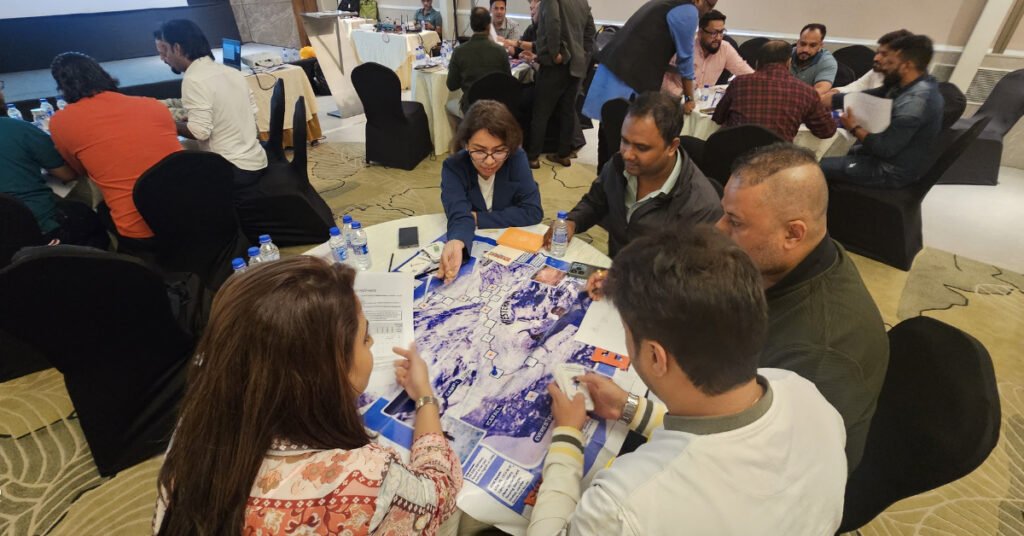
Everest Challenger Simulation Transforms teams through experiential learning Everest Challenger Simulation: A Corporate Training Experience That Transforms Teams Some training programs teach people what to think. The Everest Challenger Simulation facilitates people how to think — under pressure, with incomplete information, and alongside others who each hold a different piece of the puzzle. This is not a classroom exercise with a predictable outcome. It is a structured, immersive board based corporate training simulation that places teams inside one of the most challenging environments imaginable: the final push to the summit of Mount Everest. And every decision they make — whether to press forward or turn back — shapes what happens next. For companies investing in leadership development training, team building programs, and experiential learning for employees, the Everest Simulation delivers something that no whiteboard session or lecture ever could: genuine stakes, real consequences, and the kind of reflection that stays with a team long after the debrief is over. What Is the Everest Challenger Simulation? The Everest Challenger Simulation is a team-based experiential learning program where participants are assigned specific roles within a climbing expedition — Base Camp Manager, Team Leader, Weather Analyst, Medical Officer, and others. Each role comes with exclusive information that only that person can see. To succeed, team members must communicate clearly, share knowledge, negotiate priorities, and make collective decisions that balance ambition against risk. The simulation unfolds across multiple rounds that mirror the stages of a real Everest expedition — acclimatisation camps, summit windows, shifting weather patterns, and the physical deterioration of climbers over time. Teams must decide how much oxygen to carry, when to rest, how to handle medical emergencies, and whether deteriorating conditions justify pulling back or pushing forward. None of these decisions are straightforward. All of them reflect the kind of judgment calls that corporate leaders face regularly, just framed in a context that makes the consequences viscerally clear Explore what’s possible with Aarvi Everest Challenger Simulation From decision-making to team collaboration, transform your workforce with the power of the Everest Challenger Simulation. Learn More Why Experiential Learning Works Better Than Traditional Corporate Training There is a reason that corporate leadership development programs around the world are increasingly moving away from passive learning formats. Sitting through a presentation on communication skills or watching a video about decision-making frameworks does not create the same neural pathways as actually experiencing the pressure of a difficult decision and living with its outcome. Experiential learning — learning by doing — is supported by decades of adult learning research, and the Everest Simulation sits squarely within that tradition. When a participant in the Everest Challenger Simulation makes a call to push for the summit despite a weather warning they did not fully share with their team, and the consequences of that choice cascade through the next two rounds, the lesson lands differently than any slide about the importance of transparency ever could. The emotional weight of experiential learning for employees creates a memory anchor that conventional training simply cannot replicate. The Leadership Lessons Hidden Inside Every Round What makes the Everest Simulation genuinely powerful as a leadership development tool is that it does not announce its lessons. It does not pause and say, “Now we are going to practise active listening.” Instead, it creates conditions where the absence of active listening costs the team something real — wasted resources, a missed summit window, or worse. The learning emerges organically from the experience, which means it is absorbed more deeply and retained far longer. The simulation consistently surfaces patterns that executives and HR leaders recognise immediately from their own organisations. Team members hoard information without realising it, because they assume others know what they know. Leaders make decisions based on incomplete data rather than admitting uncertainty. High performers push harder than the situation warrants while others quietly disengage. These are not Everest problems. They are business problems, and the simulation creates a safe environment to examine them without the real-world cost of getting them wrong. The structured debrief that follows the simulation is where these observations get named, examined, and connected back to the workplace. Facilitators guide teams through a reflection process that links what happened on the mountain directly to the dynamics, habits, and blind spots they carry into every project meeting and quarterly review. High-Stakes Decision-Making Training in a Risk-Free Environment One of the most valuable aspects of the Everest Challenger Simulation as a corporate training tool is that it replicates the cognitive and emotional texture of high-stakes decision-making without any real-world downside. Participants feel the pressure of choosing between competing priorities — summit success versus team safety, speed versus caution, individual ambition versus collective wellbeing — in a context where they are fully engaged and emotionally invested. This is particularly valuable for corporate teams preparing for periods of significant change, growth, or disruption. The simulation builds what psychologists sometimes call psychological resilience — the ability to hold steady, think clearly, and make good calls when the environment is uncertain and the information is imperfect. For companies investing in high-pressure corporate training programs, this capacity is not a soft skill. It is a strategic asset. Cross-Functional Collaboration and Shared Understanding The role-based structure of the Everest Simulation makes it an exceptional vehicle for breaking down silos — one of the most persistent and expensive problems in modern organisations. When a participant can only see their own fragment of the expedition’s data, and success depends entirely on whether the group manages to combine those fragments into a coherent picture, the experience makes silos tangible in a way that no organisational chart ever does. Teams that work across departments — finance, operations, marketing, product — often struggle with a version of this problem every single day. Each function has its own visibility, its own language, its own priorities. The Everest Simulation compresses that dynamic into a single afternoon and makes it impossible to ignore. The cross-functional team building that results from this shared experience carries genuine weight

Blogs

Generative AI for IT

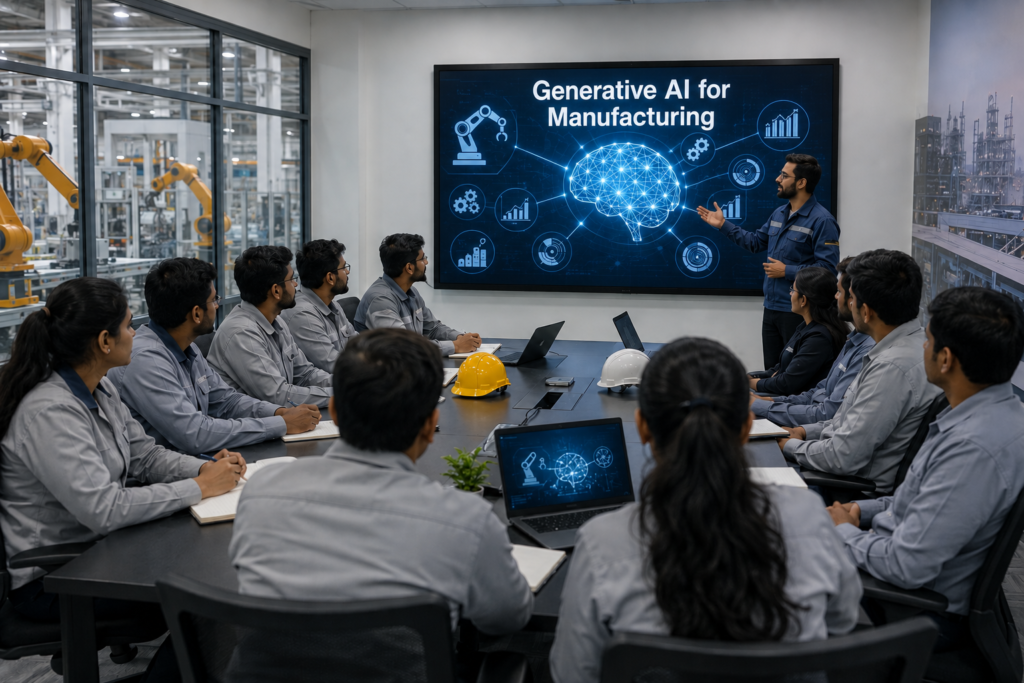
Generative AI Transforming IT teams How Generative AI is Transforming Everyday IT Workflows? The IT industry has always been driven by speed, precision, and constant change. Today, teams are expected to deliver faster releases, smarter solutions, and seamless user experiences—often with limited time and growing complexity. This is where Generative AI is quietly becoming a valuable addition to everyday IT workflows. Instead of replacing expertise, it supports developers, testers, analysts, and IT leaders in doing their work more efficiently. From writing code snippets to improving documentation and accelerating testing cycles, it’s helping IT teams focus more on problem-solving and less on repetitive tasks. For organizations investing in corporate training, this shift presents a strong opportunity. Upskilling teams with Generative AI capabilities is no longer just about learning a tool—it’s about enabling smarter ways of working across the entire IT function. How Generative AI is Changing Day-to-Day IT Work? In many IT environments, a large portion of time is spent on tasks that, while necessary, don’t always require deep creative thinking. Writing boilerplate code, debugging common issues, creating reports, or documenting systems can slow down progress. Generative AI helps reduce this load. Developers can generate initial code structures, making it easier to start projects or experiment with new ideas. QA teams can create test cases faster, ensuring broader coverage without increasing effort. IT support teams can respond to queries more efficiently with structured responses and knowledge assistance. What this means in practice is simple: teams spend less time on repetitive work and more time on innovation, architecture, and strategic thinking. Explore what’s possible with Aarvi GenAI From writing code to streamlining workflows, bring efficiency into every step of your IT operations. Learn More Improving Software Development and Delivery Speed One of the most noticeable changes is in software development cycles. When developers have support in writing, reviewing, and refining code, projects move faster without compromising quality. Generative AI assists in: Drafting code suggestions Identifying potential errors early Improving code readability and documentation This doesn’t eliminate the need for skilled developers. Instead, it enhances their productivity and allows them to focus on building better systems rather than getting stuck in routine tasks. For IT companies, this leads to quicker delivery timelines and more agile project execution. Smarter Testing and Quality Assurance Testing often becomes a bottleneck in IT projects due to time constraints and limited resources. Generative AI helps streamline this by generating test scenarios, automating repetitive validation processes, and even suggesting edge cases that might otherwise be missed. QA teams can now: Create test cases in less time Improve test coverage Identify issues earlier in the development cycle This results in more reliable software and fewer last-minute surprises before deployment. Better Documentation and Knowledge Management Documentation is critical in IT—but often neglected due to time pressure. Generative AI makes it easier to create clear, structured, and consistent documentation without adding extra workload. Teams can quickly generate: Technical documentation API descriptions User manuals Internal knowledge base content This improves collaboration across teams and ensures that knowledge is not lost or siloed. Strengthening IT Support and Operations IT support teams handle a large volume of repetitive queries. Generative AI helps streamline responses by providing accurate, context-based suggestions. It can assist in: Drafting support responses Creating troubleshooting guides Improving internal helpdesk systems This leads to faster resolution times and a better experience for both internal teams and end users. Why Corporate Training in Generative AI Matters While tools are accessible, effective usage depends on how well teams understand and apply them in real-world scenarios. This is where structured corporate training plays a key role. Organizations that invest in Generative AI training programs for IT teams see stronger adoption and better results. Employees learn not just what to use, but how to use it in their daily workflows. Training programs tailored for IT professionals typically focus on: Practical use cases in software development and testing Real-time problem solving with Generative AI tools Responsible and effective implementation Integration into existing IT processes This approach ensures that teams are confident, capable, and aligned with business goals. Building Future-Ready IT Teams Technology will continue to evolve, but the core advantage will always lie in how teams adapt to change. Generative AI is not about replacing roles—it’s about enhancing capabilities. Organizations that proactively train their IT workforce are better positioned to: Deliver projects faster Improve quality and efficiency Stay competitive in a dynamic market For IT leaders, the focus is clear: equip teams with the right skills, provide hands-on training, and create an environment where innovation is part of everyday work. Conclusion Generative AI is becoming a practical part of modern IT operations. From development and testing to documentation and support, it is helping teams work smarter and deliver better outcomes. For companies offering corporate training, this is the right time to introduce structured Generative AI programs designed specifically for IT professionals. With the right guidance and real-world application, teams can unlock new levels of productivity and efficiency—while staying focused on what truly matters: building impactful technology solutions.

Blogs

Why Generative AI is the Future of Sales and Revenue Growth

Gen AI for Sales & Revenue Growth Why Generative AI is the Future of Sales and Revenue & Growth ? Sales teams are under constant pressure to deliver faster results, build deeper customer relationships, and stay ahead of the competition. Traditional sales approaches are no longer sufficient in a world driven by data, personalisation, and digital engagement. This is where Generative AI in Sales is emerging as a game-changer. Generative AI is not just a technological upgrade — it is redefining how sales teams operate, communicate, and close deals. Organizations that invest in Generative AI training for sales teams are witnessing significant improvements in productivity, conversion rates, and customer experience. What is Generative AI in Sales? Generative AI in sales refers to the use of advanced AI models to create content, automate interactions, analyze customer data, and assist sales professionals in real-time decision-making. From generating personalized emails to predicting customer behavior, AI is enabling smarter and more efficient selling. Unlike traditional automation tools, Generative AI understands context, tone, and intent, making sales communication more human-like and impactful. Explore what’s possible with Aarvi GenAI From personalized outreach to smarter decision-making, transform your sales with the power of Generative AI. Learn More The Role of Generative AI in Modern Sales Strategies Sales today is not just about pitching a product — it’s about creating value-driven conversations. Generative AI empowers sales teams to move from generic outreach to hyper-personalised engagement. With the help of AI, sales professionals can: Craft personalised sales emails in seconds Generate compelling product pitches tailored to customer needs Analyse large volumes of customer data for insights Automate follow-ups and responses Predict buying behaviour and intent This shift allows sales teams to focus more on building relationships rather than spending time on repetitive tasks. Enhancing Customer Experience Through AI-Powered Sales Customer experience is the core of successful sales. Generative AI helps businesses deliver a seamless and personalised journey at every touchpoint. AI-driven tools can analyse past interactions, preferences, and behaviours to recommend the right product or service at the right time. This level of personalisation not only increases customer satisfaction but also builds long-term trust. When sales teams are trained in Generative AI tools for sales, they can engage customers with more relevant, timely, and meaningful communication. Boosting Sales Productivity with Generative AI One of the biggest advantages of Generative AI is its ability to significantly improve sales productivity. Sales professionals often spend a large portion of their time on administrative tasks such as writing emails, updating CRM systems, and preparing reports. Generative AI automates these processes, allowing teams to focus on high-value activities like closing deals and nurturing leads. With proper corporate training in Generative AI for sales teams, organisations can ensure that employees are equipped to use these tools effectively and efficiently. Data-Driven Decision Making in Sales Data plays a crucial role in sales success. However, interpreting large volumes of data can be challenging. Generative AI simplifies this by providing actionable insights in real time. Sales teams can use AI to identify high-potential leads, understand customer intent, and forecast sales trends with greater accuracy. This leads to better decision-making and improved sales outcomes. Training programs focused on AI-driven sales strategies help professionals understand how to leverage data for maximum impact. Personalisation at Scale: The Key to Higher Conversions In the digital age, customers expect personalised experiences. Generic sales pitches no longer work. Generative AI enables personalisation at scale, allowing businesses to tailor their messaging for thousands of customers simultaneously. From customized email campaigns to personalised product recommendations, AI ensures that every interaction feels unique. Organisations investing in Generative AI sales training programs are seeing higher engagement rates and improved conversion metrics. Why Corporate Training in Generative AI is Essential for Sales Teams While Generative AI offers immense potential, its success depends on how well teams are trained to use it. Without proper training, businesses may struggle to fully leverage AI capabilities. Corporate training programs play a critical role in: Helping sales teams understand AI tools and applications Improving adoption and usage of AI technologies Enhancing digital selling skills Aligning AI strategies with business goals Companies that prioritise Generative AI corporate training are better positioned to stay competitive in the evolving sales landscape. The Future of Sales with Generative AI The future of sales is intelligent, automated, and highly personalised. Generative AI will continue to evolve, bringing new opportunities for businesses to connect with customers in more meaningful ways. Sales teams that start using AI today are setting themselves up to lead in the future. By bringing Generative AI into their sales processes and investing in the right training, organizations can work more efficiently, improve performance, and open the door to greater growth. Conclusion Generative AI is transforming the way sales teams operate, making processes faster, smarter, and more customer-centric. From personalised communication to data-driven insights, the impact of AI on sales is undeniable. For organisations looking to stay ahead, investing in Generative AI training for sales teams is no longer optional — it is essential. By equipping teams with the right skills and tools, businesses can drive better results, enhance customer relationships, and achieve sustainable growth.

Scroll to Top